
Your Team Knows What to Do
So Why Isn’t It Happening?
We created this guide to help leaders address the invisible barriers between training and performance. Download it below.
What You’ll Get From This Guide
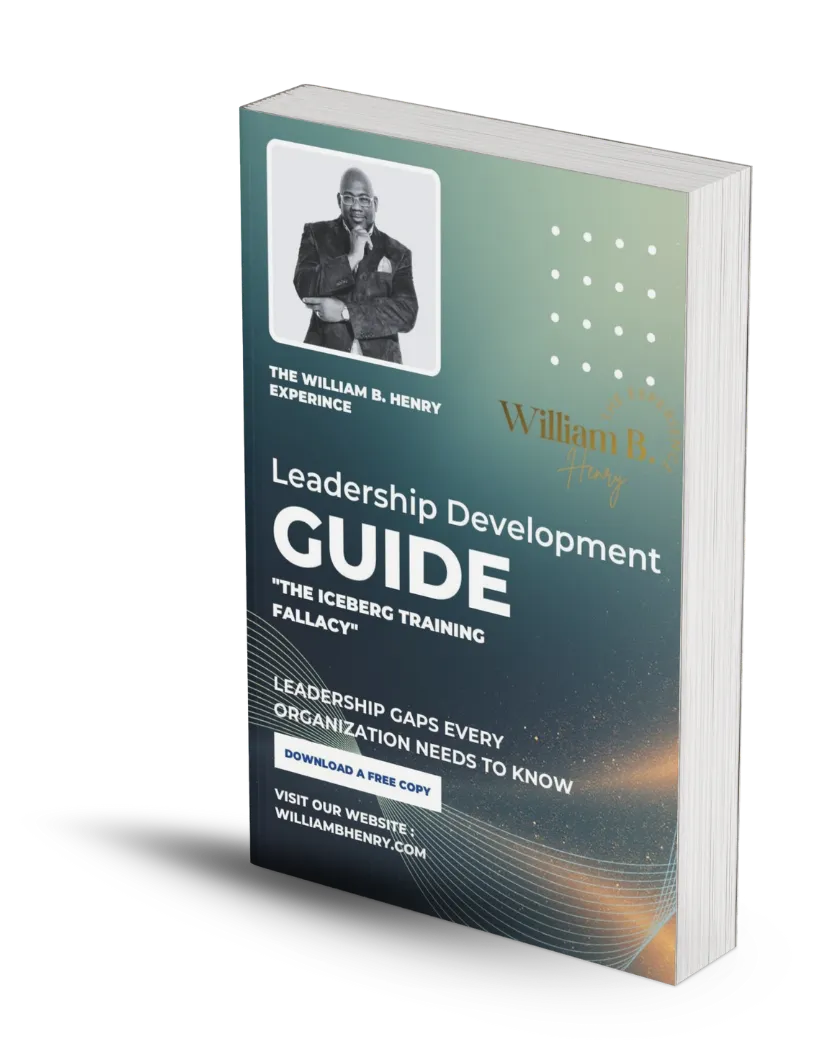
What You’ll Get From This Guide
A simple explanation of the Iceberg Training Fallacy
Clarity on what’s really holding your people back
A new lens for leadership and people development
The difference between surface-level skills and deep capability
Common mistakes organizations make with onboarding and training

What Leaders Are Saying:
Dr. Bob Wilmouth
President of
Krista Montague
CEO-MSUB Foundation Alumni

TOBY O'ROURKE
CEO of Kampgrounds of America
Looking to improve performance through training - yet results still aren’t sticking?
Hi, I’m William B. Henry.
If your people know what to do - but still struggle to execute consistently - you’re not alone. And it’s about to get harder Here’s why.
Organizations are investing more than ever in:
- Virtual learning platforms
- Leadership programs
- Online courses and certifications
Yet engagement is dropping.
Retention is declining.
And performance gaps keep widening.
Why?
Because the workplace has changed faster than how we train people.
Remote teams. Hybrid work. Constant disruption. Cognitive overload.
The cost of attention is skyrocketing.
And information alone no longer creates behavior change.
Let’s be honest.
Technology has transformed how we deliver training.
But the next wave of change - the one most organizations aren’t prepared for - is this:
Training that doesn’t address what’s beneath the surface will never scale.
And here’s the part most people miss.
There’s one thing no platform, LMS, or AI tool can replace:
Human behavior under pressure.
In organizations built on trust, leadership, and collaboration, performance isn’t determined by what people know.
It’s determined by:
- Mindset
- Habits
- Beliefs
- Communication patterns
- Psychological safety
- Decision-making in real moments
That’s where most training fails.
The good news?
You can design training that actually works - if you understand the hidden gap.
And that’s exactly why I created The Iceberg Training Fallacy Guide.
This isn’t theory. It’s a proven framework.
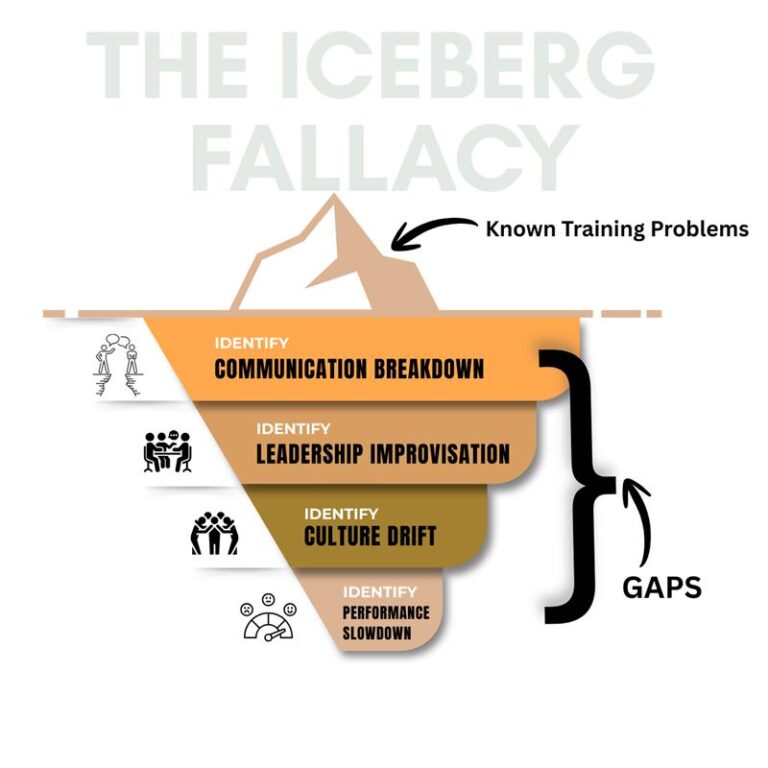
Most organizations focus on the visible tip of the iceberg:
- Skills
- Knowledge
- Compliance
- Completion rates
But what actually drives performance lives below the surface.
This guide shows you how to identify - and develop - that layer.
Some organizations keep adding more training.
More modules.
More content.
More checklists.
They hope the next program will finally fix engagement or performance.
Others invest heavily in virtual learning - yet struggle to see real behavior change.
The problem isn’t effort.
It’s depth.
You need The Iceberg Training Fallacy Guide:
A practical framework that closes the gap between knowing and doing.
In this guide, you’ll discover:
- The hidden reasons training doesn’t translate into performance
- Why completion rates don’t equal capability
- How to develop what’s beneath the surface - without adding more workload
- A smarter approach to virtual and hybrid learning
- How high-performing organizations embed development into daily work
This guide reveals the unseen factors that quietly determine whether training sticks—or fades.
How do we know it works?
This framework was developed through years of research, facilitation, and real-world application across industries.
- Leaders who apply these principles see:
- Stronger leadership readiness
- Higher engagement
- Better communication
- Training that actually compounds over time
Because development stops being an event - and becomes a system.
If you’re serious about building leaders, not just running training…
If you want learning that translates into action…
If you’re ready to move beyond surface-level development-
Download The Iceberg Training Fallacy Guide
Unlock what’s really driving performance:
- Turn training into real behavior change
- Strengthen leadership capability
- Improve engagement and retention
- Make virtual learning actually stick
👉 Download this free guide now
and start developing what truly drives results - below the surface.
Get exclusive access to:
A free 15-minute consultation to discuss your organization's specific challenges
Invitations to upcoming leadership development webinars
The latest research and insights on organizational growth


Quick link
About Us
Book a Consultation
Free Growth Assessment
Pricing Plan
Contact
Contact Us
Phone Call:
+1 406-534-7449


©2026 All rights William B. Henry. Designed By Billings Launchpad